


Practice · Adults · 1070 Vienna
Ceramic Braces in Vienna: Tooth-Colored Fixed Braces by Prof. Jonke
A fixed braces system that’s barely noticeable in everyday life: Ceramic brackets are tooth-colored and therefore discreet. The fixed brackets made of translucent dental ceramic (also known as ceramic brackets or, colloquially, “white braces”) are bonded to the outer surface of the teeth and exert continuous force via a wire: fixed braces for adults in Vienna.
At the practice of Univ.-Prof. DDr. med. Erwin Jonke, located at Mariahilfer Straße 32, 3rd floor, 1070 Vienna, your orthodontic treatment is in expert hands from the very first evaluation. An orthodontist is a dentist who has completed several years of additional specialized training in the diagnosis and correction of misaligned teeth and jaws. This is precisely Prof. Jonke’s area of expertise: He is a professor of orthodontics at the University Dental Clinic of Vienna and vice president of the Austrian Society of Orthodontics (ÖGKFO).
The first step is very simple: Call us at 01 / 524 48 68 or email us at praxis@jonke.at. During your free initial consultation, we’ll determine whether ceramic braces are right for you.
★ Tooth-colored & subtle
★ Fixed Braces
★ Same effect as metal
★ Also for nickel allergy
★ 5.0 DocFinder
★ 4.3 Google | ★ 5.0 DocFinder | ★ 4.98 Doctify
1,000+ Families · 457 Reviews
Your Benefits
Why Ceramic Brackets?
Tooth-colored & subtle
Translucent dental ceramics reflect light just like a natural tooth—they are virtually invisible from a distance.
Gentle Tooth Movement
Forces are distributed evenly—which protects the tissue and gums.
Efficient & Fast
Modern ceramic brackets often allow for a shorter overall treatment time and more comfortable follow-up visits.
Easier Oral Hygiene
Significantly smaller and flatter than traditional metal brackets.
Process
How your treatment works
Initial Consultation & Diagnosis
We’ll determine whether fixed braces are a good option and discuss the different options.
Digital Planning
Photos, digital scans, and 3D models as the basis for treatment.
Insert
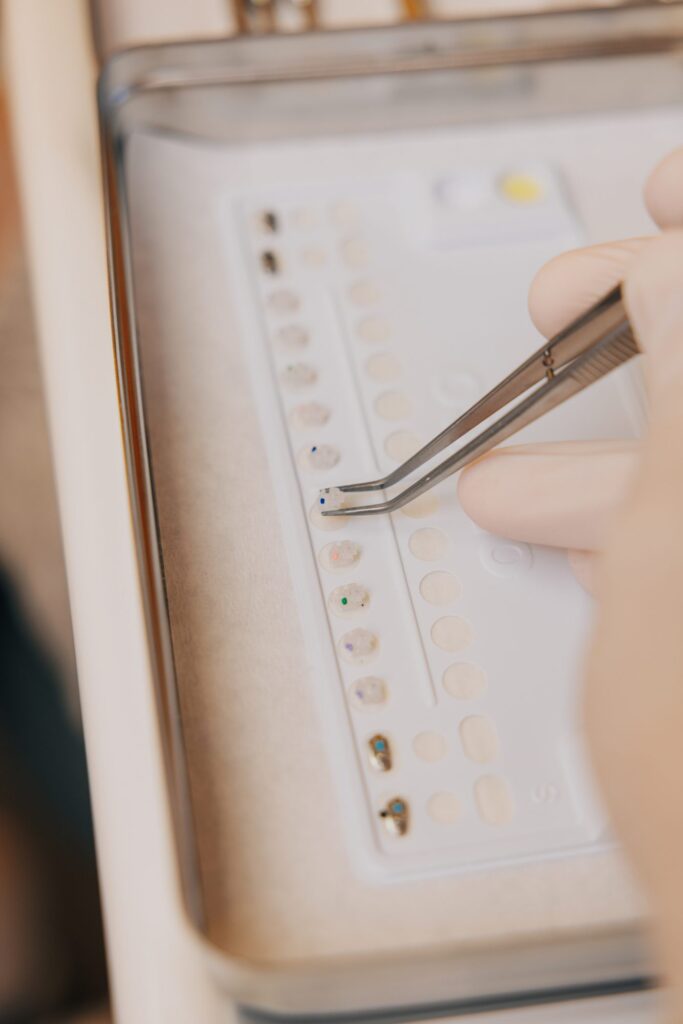
The tooth-colored ceramic brackets are bonded to the teeth.
Inspections
Regular check-ins until the final result is achieved.
The method
What are ceramic braces?
Ceramic brackets are made of translucent—that is, light-transmitting—dental ceramic rather than metal, making them more discreet: they are barely visible from a normal conversational distance.
In everyday life, you need to be a little more careful with hard foods. The bracket itself does not stain.
Costs
How much do ceramic braces cost in Vienna?
Ceramic braces are considered an elective service—that is, a service that must be paid for out of pocket—and are more expensive than metal braces. Because every patient’s dental situation is different, we’ll provide you with a personalized cost estimate after your initial examination so you can clearly plan your expenses. Whether a public health insurance plan or private supplemental dental insurance covers part of the costs depends on the respective eligibility requirements and your plan. You should therefore clarify any potential cost coverage with your insurance provider before treatment begins.
Would you like to know what treatment with ceramic brackets means for you? Schedule your free initial consultation by calling 01 / 524 48 68 or by emailing praxis@jonke.at.
Appointment Booking
Book Appointment Directly
Simply choose a date and time. Free initial consultation.
Frequently Asked Questions
Questions About Ceramic Braces
Are ceramic braces really inconspicuous?
Yes, they are tooth-colored or translucent and barely visible from a normal conversational distance.
What are the disadvantages of ceramic braces?
They are more expensive than metal braces. Extra care is needed when eating very hard foods.
Are there ceramic braces without elastics?
Yes, our ceramic brackets are self-ligating and do not require rubber bands; in certain cases, intermaxillary elastics are also used.
How much do ceramic braces cost?
As an optional service, they are more expensive than metal brackets; the cost is determined based on an individual assessment.
How long does treatment with ceramic brackets take?
Typically 1.5 to 2 years, depending on the misalignment.
How do I care for ceramic braces?
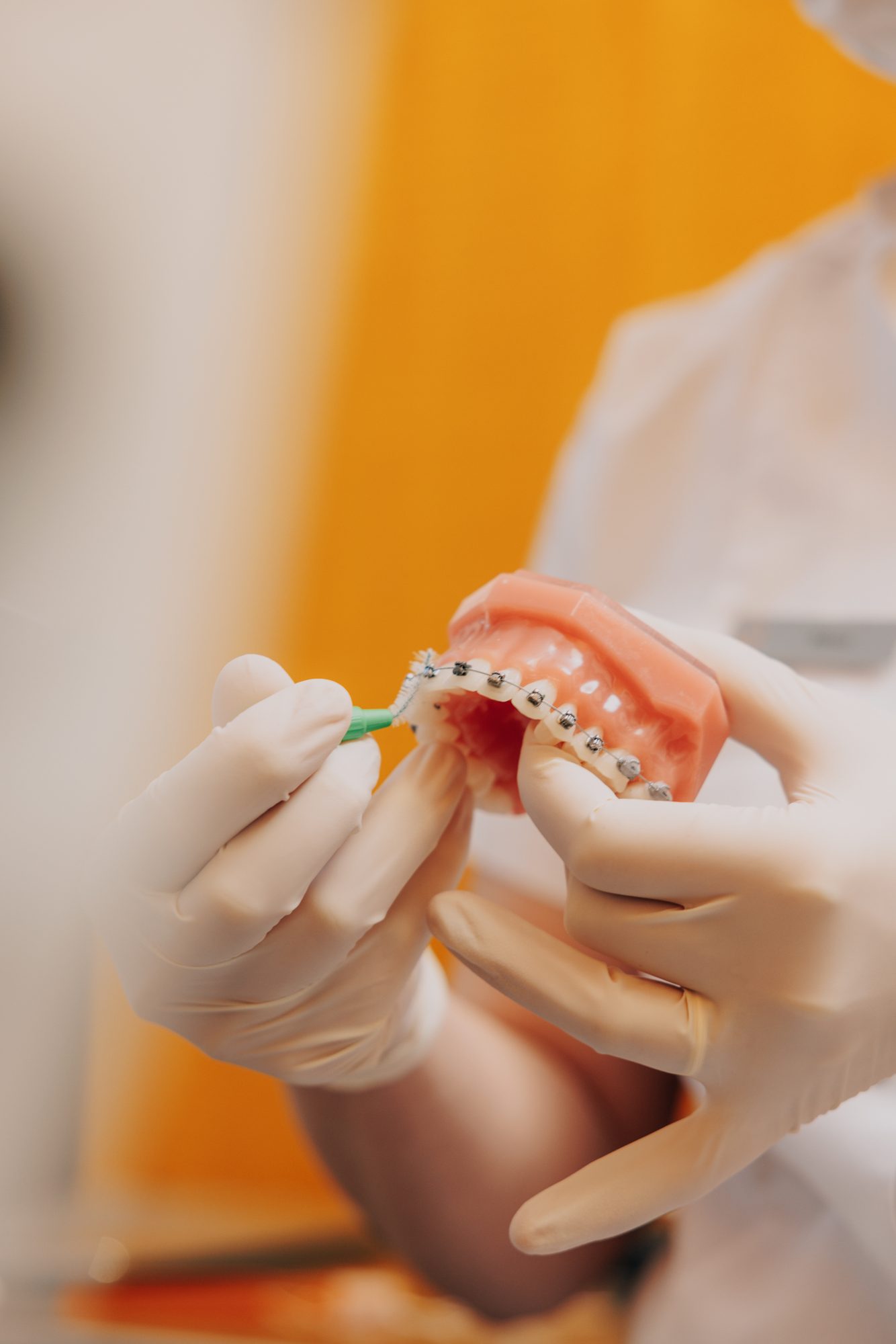
Brush thoroughly after meals and use interdental brushes to clean between your teeth, because plaque easily builds up around brackets and wires. Regular professional dental cleanings provide additional support.
What should you do if a bracket comes loose or the wire is poking you?
Please contact the office to schedule an appointment as soon as possible. A protruding, sharp wire end can be temporarily covered with a little protective wax; we can reattach a loose bracket during a quick appointment.
Who are ceramic braces suitable for?
For adults and teenagers who want fixed braces that are as discreet as possible. If you have a known nickel allergy, we’ll check to see if we can select suitable components for all necessary parts.
Do ceramic braces discolor over time?
No. The ceramic bracket itself does not take on any color.
Are ceramic braces as durable as metal braces?
Ceramic brackets are durable for everyday use during treatment. As with any fixed braces, it’s a good idea to exercise some caution when eating hard or sticky foods.
Worth Knowing
Things to Know About Ceramic Braces
Content
The Key Benefits of Ceramic Brackets at a Glance
There are two advantages to ceramic brackets:
- They are tooth-colored and are hardly noticeable during conversation.
- They are self-ligating, which means the wire is held in place without rubber bands. We use only self-ligating brackets.
A clarification regarding nickel allergies: Whether the entire system is suitable depends not only on the ceramic material. That is why, in cases of known nickel allergies, we examine brackets, clips, wires, and other components and select the appropriate ones. Regarding the self-ligating system: In certain cases, intermaxillary elastics—small rubber bands between the upper and lower jaws—are also used.
Ceramic Braces or Aligners: Which Is a Better Fit for Me?
Both result in straight teeth and are barely noticeable in everyday life; the main difference is whether the braces are fixed or removable. Ceramic brackets are permanently bonded to the teeth and work continuously without you having to think about them in your daily life. Aligners are removable and require consistent wear.
Ceramic brackets are a viable option when a discreet appearance is a priority. If you have a known nickel allergy, we will review all components of the system and select appropriate ones.
The First Few Days and What You Can Eat
In the first few days after the brackets are placed or after an adjustment, you may feel a slight pressure on your teeth. This usually subsides after a few days. Soft foods, cool water, and, if necessary, an over-the-counter pain reliever can help you get through this period.
You can eat as usual. Just follow a few precautions to protect your brackets, as you would with any fixed braces: It’s best to avoid very hard foods like nuts, crusts, or hard bread crusts, as well as gum and sticky candies.
How Long Does Treatment with Ceramic Braces Take? Duration & Care
Treatment with ceramic brackets usually takes about 1.5 to 2 years. The exact duration depends on the misalignment, the course of treatment, and your cooperation—specifically, whether you keep your follow-up appointments and maintain good oral hygiene. Plaque tends to build up more easily around brackets and wires; therefore, thorough brushing after meals and using interdental brushes for the spaces between your teeth are important, and regular professional dental cleanings provide additional support.
Ceramic or Metal Braces: What’s the Difference?
Ceramic and metal braces are both fixed orthodontic appliances and work on the same principle using a wire. Both systems can be used to treat many types of misaligned teeth. They differ primarily in appearance, cost, and durability.
| Criterion | Ceramic Brackets | Metal Brackets |
|---|---|---|
| Visibility | Tooth-colored, barely visible from conversational distance | silver and visible |
| Costs | more expensive | most affordable fixed option |
| Durability | Be a little more careful when eating | very sturdy |
| Discoloration | Bracket does not take on any color | Metal does not take on any color |
| Nickel Allergy | The suitability of all components is assessed on a case-by-case basis | The suitability of all components is assessed on a case-by-case basis |
Your Next Step Toward Straight Teeth
You don’t have to decide just yet. Just get to know us. During your free initial consultation, we’ll examine your teeth, answer your questions, and let you know if ceramic braces are a good option for you.
Please call us at 01 / 524 48 68 or email us at praxis@jonke.at.
The practice is ISO 9001:2015 certified and climate-neutral. ISO 9001 certification means that procedures such as hygiene, instrument sterilization, and treatment steps are audited and regularly monitored by an external body.
Ceramic Braces Clinic in Vienna: Location & Directions (U3 Neubaugasse)
You’ll find us right next to the Neubaugasse U3 station (Stiftgasse exit). We’re open Monday through Friday from 8:00 a.m. to 6:00 p.m.
Univ.-Prof. DDr. Erwin Jonke
Prof. Erwin Jonke, DDr. med.
Specialist in Dentistry, Oral Medicine, and Maxillofacial Surgery
Specialist in Orthodontics
Mariahilfer Straße 32, 3rd Floor,
, 1070 Vienna
Phone: 01 / 524 48 68
Email: praxis@jonke.at