


Practice · Adults · 1070 Vienna
Professional Oral Hygiene in Vienna with Prof. Jonke
Professional dental cleaning removes tartar, plaque, and stains from areas that a toothbrush and dental floss cannot reach at home, making it one of the most important preventive measures for maintaining long-term dental health.
At the practice of Univ.-Prof. DDr. med. Erwin Jonke, located at Mariahilfer Straße 32, 3rd floor, 1070 Vienna, your oral health is in expert hands. Prof. Jonke is a professor of orthodontics at the University Dental Clinic in Vienna and vice president of the Austrian Society of Orthodontics (ÖGKFO).
The first step is very simple: Call us at 01 / 524 48 68 or email us at praxis@jonke.at.
★ Protection against tooth decay
★ Airflow
★ Also with braces
★ Gentle
★ 5.0 DocFinder

★ 4.3 Google | ★ 5.0 DocFinder | ★ 4.98 Doctify
1,000+ Families · 457 Reviews
Your Benefits
Why professional oral hygiene?
Thoroughly clean
Removes deposits even in hard-to-reach areas.
Airflow
Gently removes staining from coffee, tea and nicotine.
Important with braces
Deposits quickly build up around brackets.
Gentle
Also suitable for sensitive teeth.
Process
The Process of a Dental Hygiene Appointment
Inspection and Monitoring
We check your teeth and gums and identify sensitive areas or gum pockets in advance.
Ultrasonic Coating Removal
Using modern ultrasonic and hand instruments, we remove hard tartar and soft deposits – including between the teeth.
Airflow®
During the Airflow® procedure, a fine jet of powder, water, and air removes stubborn stains and soft plaque, even from between the teeth and in hard-to-reach areas.
Polishing and Smoothing
Mirror-smooth polished surfaces make it harder for new bacteria and staining to adhere.
Fluoridation
A fluoride varnish hardens the enamel and protects against tooth decay.
The method
What is professional oral hygiene (PZR)?
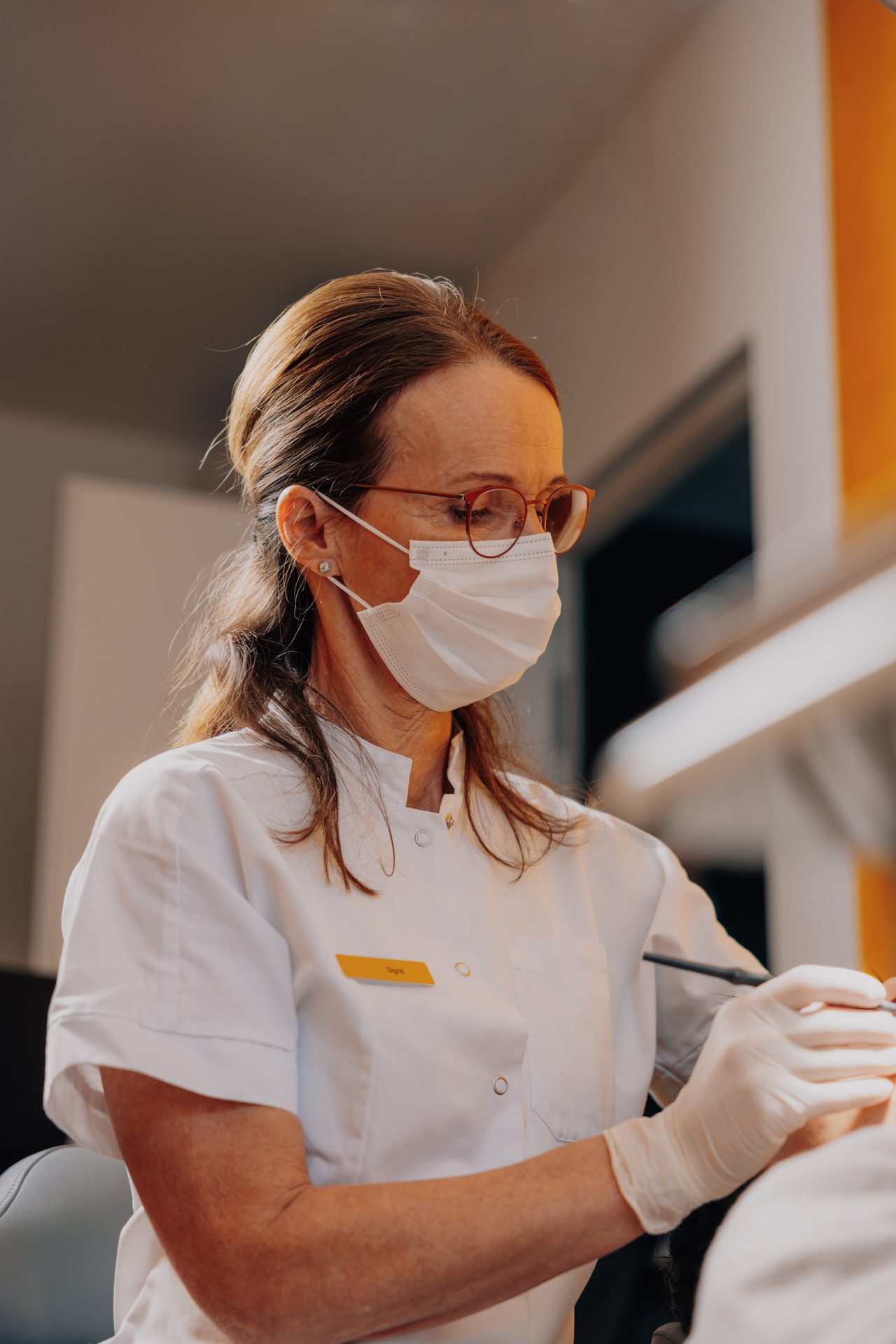
Professional teeth cleaning goes beyond brushing at home: tartar and bacterial plaque are removed, and the teeth are then polished and protected with fluoride.
It’s important to understand the difference between plaque and tartar. Plaque is a soft bacterial film (biofilm) that forms anew every day and can be removed with a toothbrush and dental floss. If left on the teeth, it mineralizes into hard tartar, which can no longer be brushed away at home.
Inflammatory diseases of the periodontium are associated with various systemic diseases. Good oral hygiene at home, regular checkups, and professional cleanings tailored to the findings are therefore recommended.
Costs & subsidy
How much does a dental cleaning cost in Vienna? Costs, Subsidies, and Reimbursements
Professional dental hygiene is generally considered a private service for adults—that is, a service you must pay for yourself that is not automatically covered by health insurance. Depending on your plan, some health insurance providers may offer a subsidy. We will issue you a detailed invoice that you can submit for reimbursement or to apply for a bonus.
Frequently Asked Questions
Questions about oral hygiene
How long does a dental cleaning take?
Usually 45 to 60 minutes, depending on the condition of the teeth.
How often should you get them done?
The appropriate interval depends on the condition of your teeth and gums, plaque buildup, whether you wear braces, and your individual risk. Separate recommendations apply for periodontitis.
How long should I wait before eating anything afterward?
After fluoridation, please follow the instructions provided by our treatment team. How long you should wait before eating, drinking, or brushing your teeth depends on the product used.
How much does a dental cleaning cost in Vienna?
The costs will be discussed on a case-by-case basis.
Will I receive a subsidy from my health insurance provider?
Depending on the plan, some health insurance companies provide a subsidy.
Is oral hygiene important during pregnancy?
Yes, it’s effective and well-tolerated; during pregnancy, hormonal changes make the gums more prone to inflammation, so thorough cleaning is especially beneficial.
Does the treatment hurt?
The treatment is usually painless; special care is taken with sensitive teeth. You may experience mild sensitivity or reddened gums for a short time.
Why can't I just brush away tartar myself?
Soft plaque can be brushed away at home. However, once it mineralizes and turns into hard tartar, it adheres firmly to the tooth and can only be removed with professional instruments.
Is professional oral hygiene the same as periodontitis treatment?
No. Professional dental hygiene is a preventive measure: it cleans the teeth and prevents inflammation. Existing periodontitis—a deep inflammation of the periodontal tissues—requires its own treatment.
What should I keep in mind after the treatment?
After the fluoride treatment, our dental team will explain what you should keep in mind when eating, drinking, and brushing your teeth; the waiting period depends on the product used.
What is the Airflow® treatment?
A process in which a fine stream of powder, water, and air gently removes stains and soft deposits, even in crevices and hard-to-reach areas.
Especially important
Oral Hygiene During Braces or Aligner Treatment
During orthodontic treatment with fixed braces or aligners, regular professional teeth cleaning is especially important.
That is why we strongly recommend professional oral hygiene during orthodontic treatment with braces or aligners. This service is optional and not included in the treatment package: It’s up to you to decide whether to take advantage of it. For fixed braces, we focus on cleaning the edges of the brackets, the spaces between the teeth, and the area along the archwire. For aligners, we focus particularly on cleaning the spaces between the teeth and hard-to-reach areas; we’ll also show you how to keep your teeth and aligners clean before reinserting them.
For ceramic or metal brackets
With ceramic or silver metal brackets, plaque builds up in the crevices around the brackets and wires, where a toothbrush can barely reach.
With aligners
With aligners, saliva and bacteria can accumulate under the aligner if it is reinserted onto teeth that haven’t been brushed.
Worth Knowing
What You Should Know About Professional Oral Hygiene
Content
Who should consider professional oral hygiene?
How often professional dental hygiene is recommended depends on the individual’s condition and risk factors. It is particularly worth considering if any of the following apply:
- Bleeding gums when brushing or red, swollen gums
- Persistent bad breath despite thorough oral hygiene at home
- visible stains caused by coffee, tea, red wine, or nicotine
- Smoking, which promotes plaque buildup
- Dental implants, crowns, or bridges that require special care
How long does a dental cleaning take, and how often is it recommended?
An oral hygiene treatment usually lasts 45 to 60 minutes, depending on the condition of your teeth. The appropriate frequency depends on the condition of your teeth and gums, plaque buildup, whether you wear braces, and your individual risk factors. Separate recommendations apply for periodontitis.
Would you like to schedule your next appointment? Call 01 / 524 48 68 or send an email to praxis@jonke.at.
White Spots and Airflow®: Good to Know
One issue that deserves special attention with fixed braces is what are known as “white spots”: whitish demineralization spots that form when plaque accumulates around the brackets over time. Thorough oral care and regular professional cleanings can prevent them.
To whiten teeth beyond their natural shade, professional teeth whitening is required, ideally preceded by a dental cleaning.
Learn more about the different types of braces: ceramic brackets, silver metal brackets, and aligners.
Your Next Step Toward Healthy Teeth
A professional dental cleaning tailored to your specific needs can be a valuable supplement to your at-home oral care routine. We’ll work with you to determine the right frequency for your teeth.
Call us at 01 / 524 48 68 or email us at praxis@jonke.at.
The practice is ISO 9001:2015 certified and climate-neutral. ISO 9001 certification means that procedures such as hygiene, instrument sterilization, and treatment steps are audited and regularly monitored by an external body.
Dental Office in Vienna: Location & Directions (U3 Neubaugasse)
You’ll find us right next to the Neubaugasse U3 station (Stiftgasse exit). We’re open Monday through Friday from 8:00 a.m. to 6:00 p.m.
Univ.-Prof. DDr. Erwin Jonke
Prof. Erwin Jonke, DDr. med.
Specialist in Dentistry, Oral Medicine, and Maxillofacial Surgery
Specialist in Orthodontics
Mariahilfer Straße 32, 3rd Floor,
, 1070 Vienna
Phone: 01 / 524 48 68
Email: praxis@jonke.at