


Why are teeth often sensitive to cold?
Do you often feel a sharp pain in your teeth when eating ice cream? Unfortunately, you’re not alone! Many people suffer from teeth that are sensitive to cold or otherwise sensitive, which is especially noticeable when eating or drinking cold foods or beverages.
However, some people also experience a sudden, sharp pain when drinking hot tea or eating particularly sweet foods.
But why do some people have such sensitive teeth, and what can be done about it? We’ll explain it all in this blog post. To understand the causes of sensitive teeth, it’s best to start with the structure of teeth:
What is a tooth made of?
The parts of a tooth are the root, the pulp, the dentin, the neck, and the enamel.
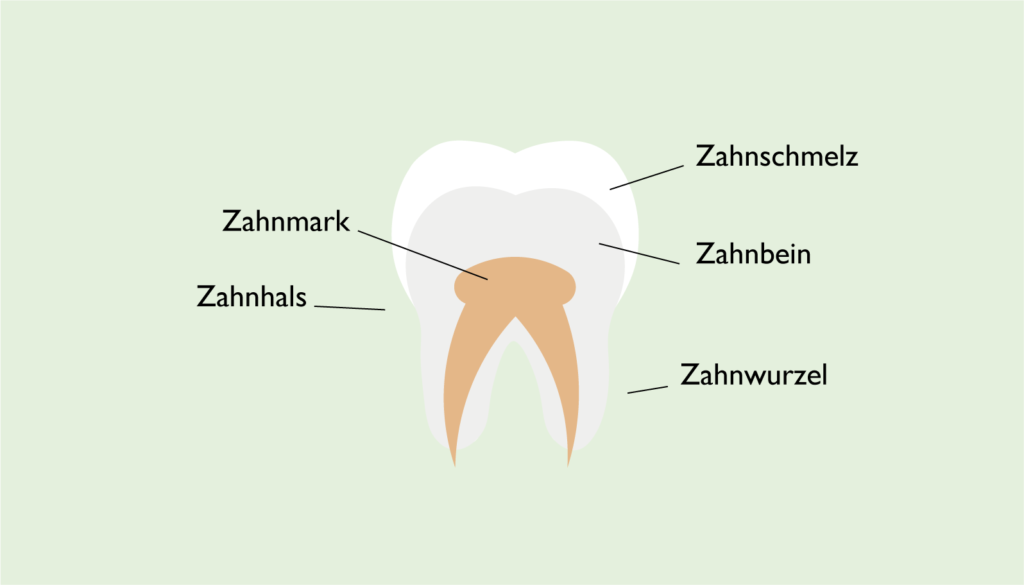
The tooth roots (radix dentis) extend into the jawbone, where they anchor the tooth. Together with the periodontium—the tooth’s functional anchoring system—they ensure that the tooth is firmly seated in the jaw. The molars, which are subjected to the greatest chewing forces, even have multiple roots—incisors and canines, on the other hand, have only one root.
Deep inside the tooth is the dental pulp. It nourishes the tooth and contains nerve fibers and blood vessels. Although it feels as though the tooth is hard all the way through, the dental pulp is a soft mass.
The dental pulp is surrounded by dent in. Dentin is a bone-like substance and makes up the bulk of the tooth. Dentin is permeated by small nerve channels called dentinal tubules. These tiny channels transmit information, such as pain signals, to the interior of the tooth.
Dentin is protected by tooth enamel, which surrounds it all the way to the neck of the tooth. Contrary to what its name might suggest, tooth enamel is the hardest substance in our body. After all, it must withstand the full force of chewing. Unfortunately, enamel does not regenerate and can be worn away by various factors. The thinner the protective layer of enamel becomes, the more sensitive the teeth become, as the tubules in the dentin described earlier are exposed to stronger stimuli. This is one cause that can lead to teeth that are sensitive to pain and cold.
What causes toothaches?
Toothaches are usually caused when the protective layer (enamel) is worn away or softened, or when the necks of the teeth are exposed. This exposes the sensitive dentin.
What causes tooth sensitivity?
Tooth sensitivity can be caused by factors such as improper brushing, a diet high in acids, or gum disease. However, genetic predisposition and advanced tooth decay can also play a role.
Why is it important to brush your teeth properly?
When brushing your teeth, it’s important to use the correct brushing technique; otherwise, so-called “brushing damage” can occur. If you press too hard, the enamel can essentially be “brushed away.” Vigorous brushing toward the gums can damage them and cause them to recede, exposing the sensitive tooth necks.
Our dental hygienists therefore recommend brushing with moderate pressure, moving from red to white—that is, from the gums along the tooth and not the other way around.
Why do teeth become sensitive to acid?
Acid makes teeth sensitive to pain because it erodes the enamel, leaving the dentin less protected. Sugar, by the way, has the same effect, since carbohydrates are converted into acid by bacteria in the mouth. That’s why you shouldn’t brush your teeth right after eating—doing so can make it easier for the enamel to wear away.
Why Do Teeth Hurt When You Have Gum Inflammation?
Inflammation of the gums can cause them to recede or pull away from the neck of the tooth, forming what are known as gum pockets. This exposes the sensitive necks of the teeth. If you notice any signs of gum inflammation, it is therefore essential to consult a dentist.
Even if you feel that your teeth are becoming more sensitive, you should visit your dentist in addition to your recommended semi-annual checkups.
Conclusion:
Sensitive teeth can be caused by several factors:
- Tooth Enamel Recession
- Gum Recession and Gum Inflammation
- Tooth Decay
- Genetic Factors
The reason for pain or excessive sensitivity to cold is the lack of protection for the dentin (the tooth’s inner layer), which is permeated with nerves and is exposed to overstimulation.