


Is waxed or unwaxed dental floss better?
Did you know that up to 30% of our tooth surface is not visible? However, it’s not hidden under the gums (otherwise it wouldn’t be a surface). In fact, these “hidden” areas are located between the teeth. There are a few things to keep in mind when it comes to oral hygiene here, because brushing with a toothbrush alone isn’t enough to clean the spaces between the teeth properly.
Why is it so important to clean between your teeth?
After meals, tiny food particles remain trapped, especially in narrow spaces between the teeth, causing plaque to form in those spaces, which makes the teeth more susceptible to gum inflammation and tooth decay. Incidentally, cavities between the teeth are particularly troublesome, as the dentist often has to treat two teeth at once to reach the affected area.
Flossing with the Invisalign Method
Even when undergoing orthodontic treatment with the nearly invisible Invisalign method, we recommend paying special attention to flossing. Ideally, after every meal, you should not only brush your teeth but also clean between your teeth with dental floss. No food particles should remain under the Invisalign aligners, as the close fit of the aligners slightly reduces the neutralizing effect of saliva.
Flossing with Fixed Braces
If you have fixed braces, we recommend using interdental brushes. Interdental brushes allow you to easily reach those areas under the brace wire that are inaccessible with dental floss. It doesn’t matter whether you wear traditional metal brackets or discreet glass-ceramic brackets.
Waxed or unwaxed dental floss?
There are two different types of dental floss: waxed and unwaxed. Unlike unwaxed floss, waxed floss has a layer of wax coating the strand. This wax coating makes it easier to slide into particularly narrow spaces between the teeth and helps protect the gums somewhat if too much pressure is applied during cleaning. The disadvantage of waxed dental floss is that it is slightly less effective at cleaning. The wax makes the surface of the floss very smooth, so it does not clean the teeth as well as unwaxed dental floss. In addition, wax can sometimes remain between the teeth.
We therefore recommend waxed dental floss for people who have little experience with flossing, as it is more forgiving. Once you feel reasonably comfortable using it, you should switch to unwaxed dental floss—it provides better cleaning results.
How do I use dental floss?
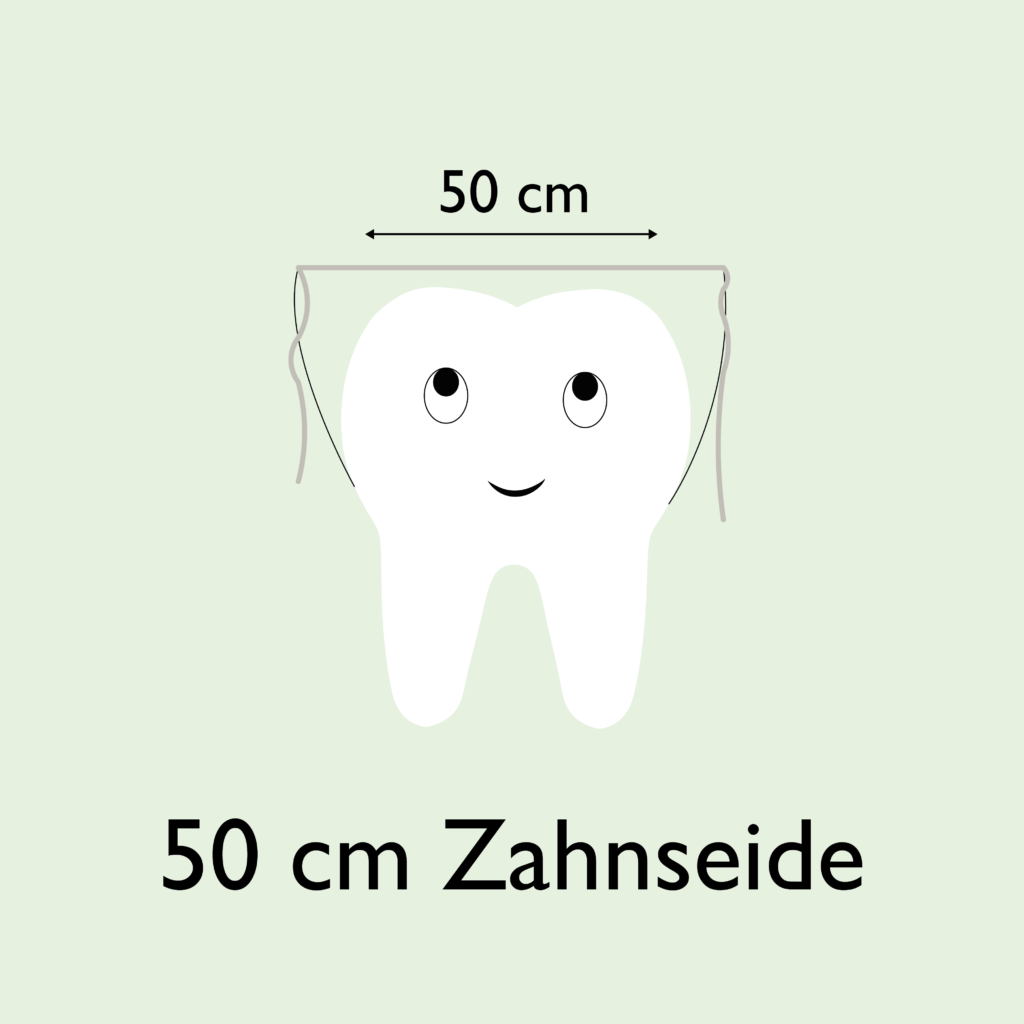
Start by taking a piece of dental floss about 50 cm long. After reading the article above, it should already be clear whether you’re better off using waxed or unwaxed floss.
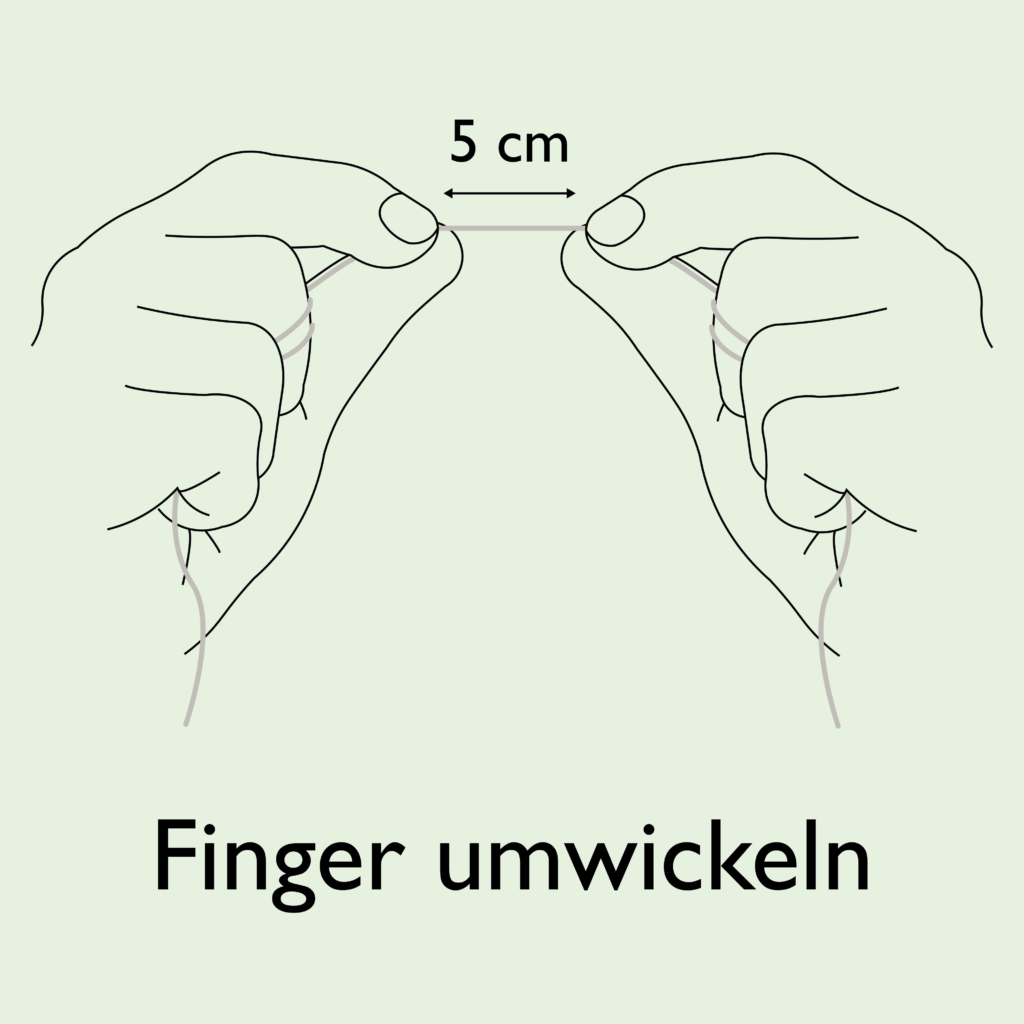
Wrap the floss once around both of your middle fingers so that a 5–10 cm long section is taut between your fingers. Now you can hold the floss comfortably with your thumb and index fingers and guide it into the spaces between your teeth—using gentle back-and-forth motions if necessary. Be careful not to slip and injure your gums.
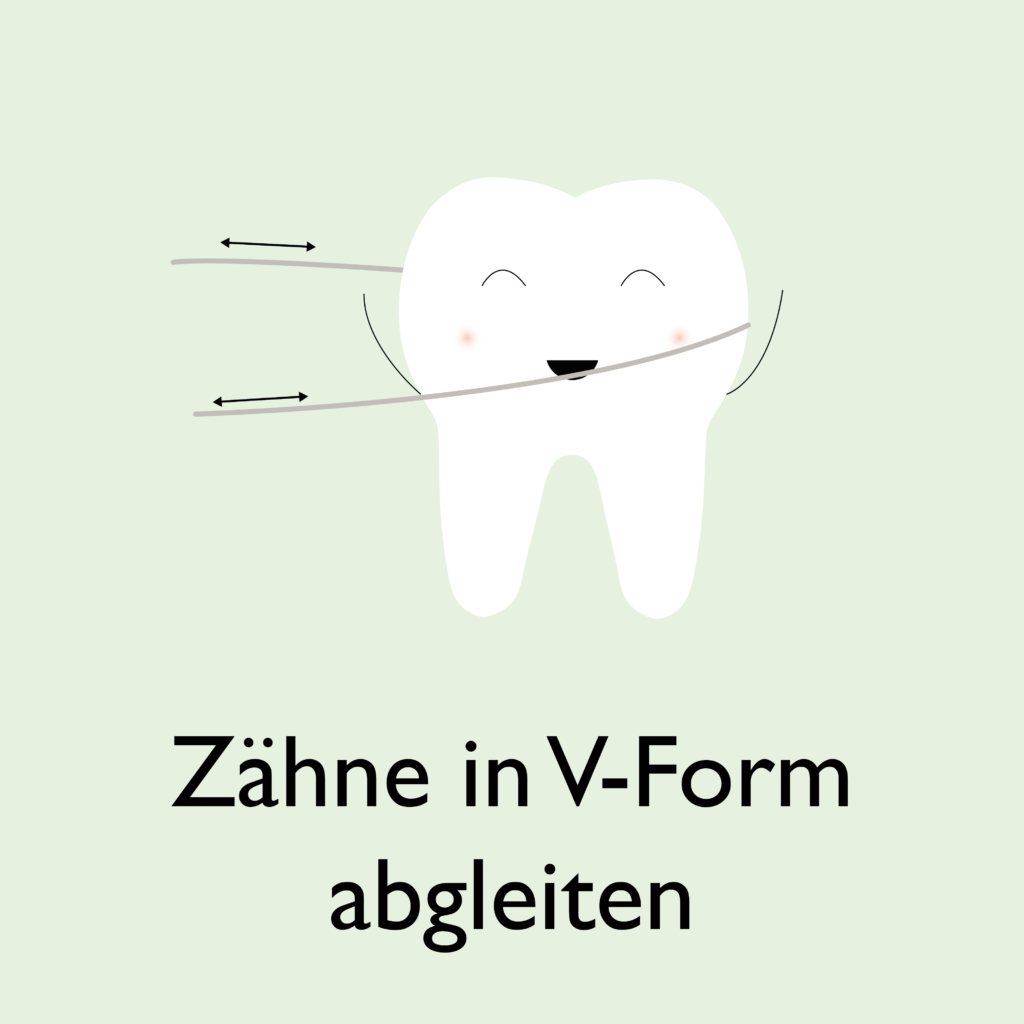
Now form a “V” with the dental floss and, using back-and-forth motions, clean between the two teeth one at a time. Then move on to the next tooth and use a fresh section of the floss.